NOWFASHION: Y/PROJECT by Slow Waves

Y/Project and its Transcendent Versatility

By Alice Ierace for NOWFASHION

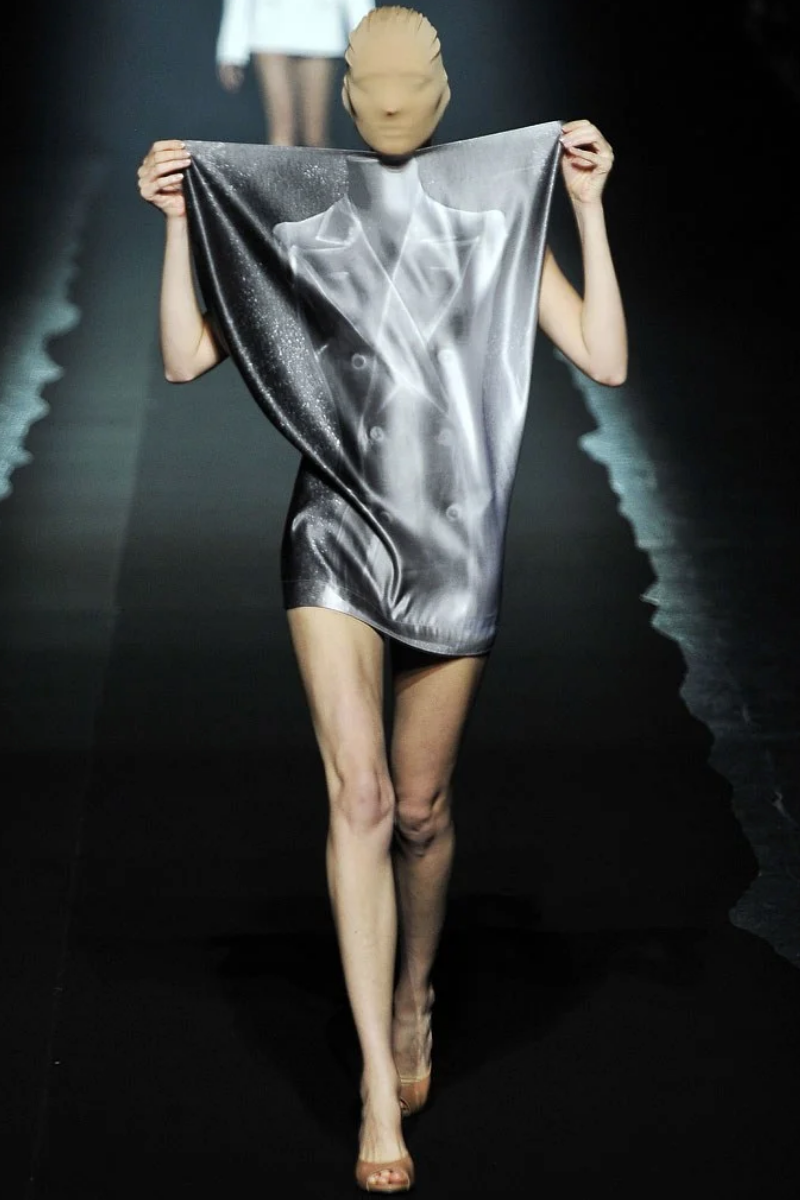
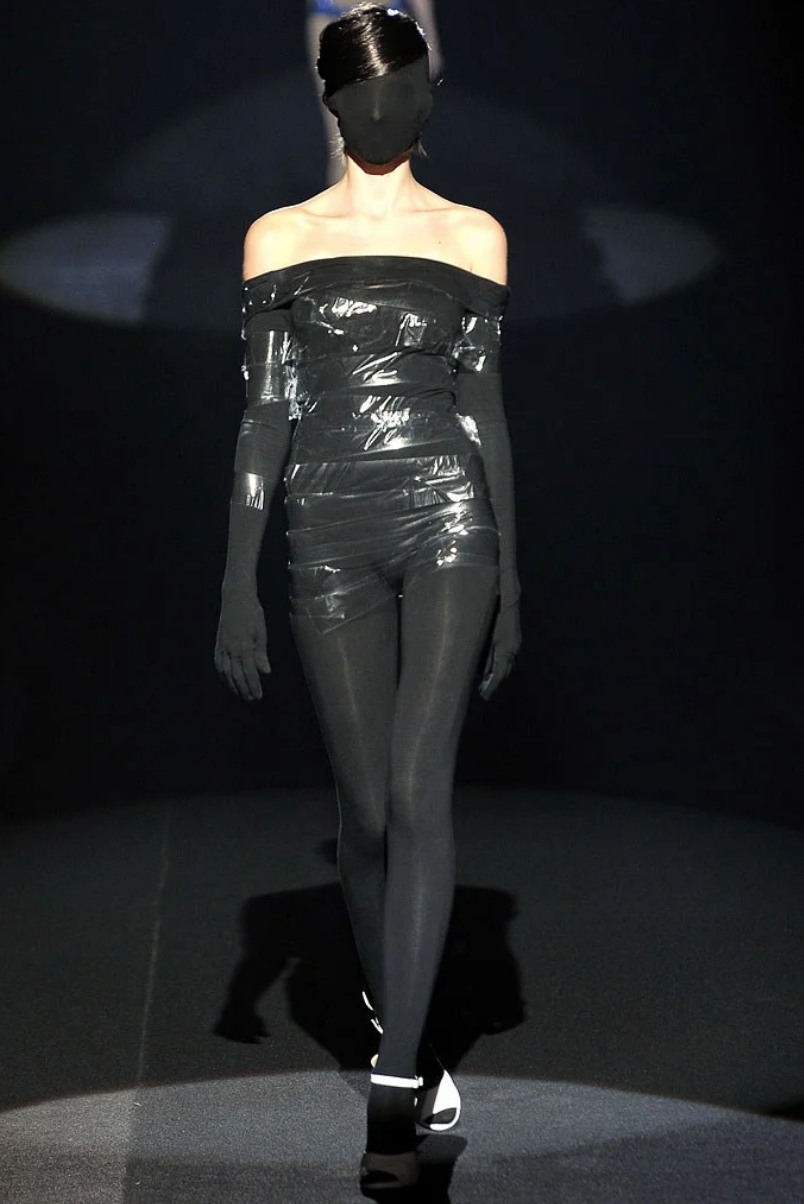
Y-Project-RTW-FW18-Paris-3470-1519915021.jpg

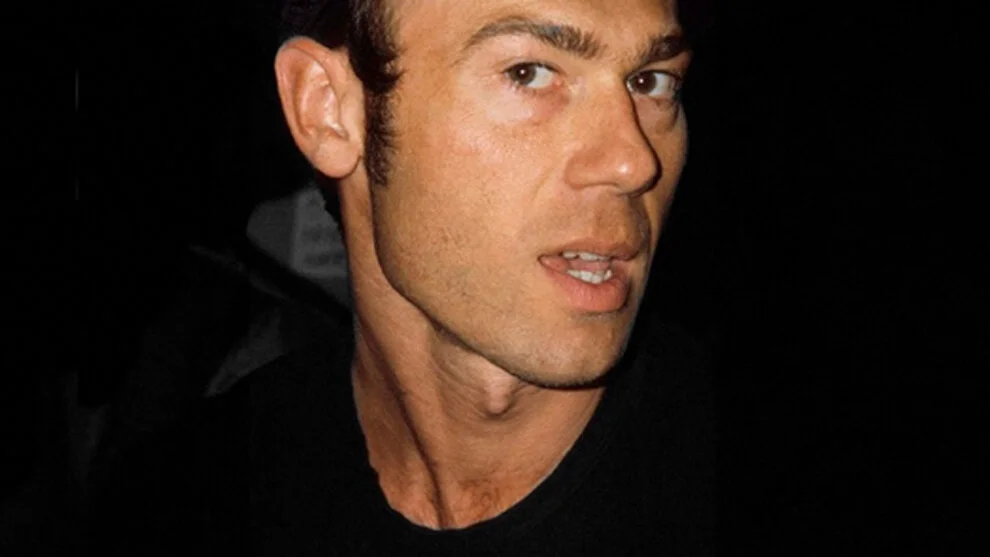
Originally founded as a partnership between French designer Yohan Serfaty and businessman Gilles Elalouf, Y/Project was once known as a conceptual design and original detailing menswear label. In 2013, when Serfaty passed away, Belgian designer Glenn Martens found himself as the creative director of the brand. 

“It was an extremely emotional process as the original creative director, the founder of the brand, Yohan Serfaty (the Y of Y/project), passed away a few weeks prior. There’s simply no ideal way for taking over a brand in mourning. Everybody, both inside and outside the house, was grieving,” Martens explained. “Out of respect for Yohan and his legacy, I decided for a slow transitioning… Starting, with my first collection, directly from Yohan’s world to infuse little by little, over a lapse of 2 years, some more of my aesthetics. Y/Project as we know today took shape when we showed our very first womenswear FW2016.”

When Martens arrived at Y/Project, he found himself with a team of just five people. “The brand wasn’t economically healthy. We have always been independent. The only injection of money we ever enjoyed was when we won the ANDAM award back in 2017,” he added.

But, after settling a renewed identity for the brand in 2016, Martens’ strategy was to scream as loud as possible. 

“That’s when we presented our denim chaps, our first cut-out pants… You need to make statements; you need to show a different approach to what’s already there in this quite saturated business. Today we are about 20 people, and our stockist counts more than 150 doors. My focus is always authenticity, craftsmanship and a straightforward concept… I wouldn’t be fulfilled by filling up the hype.”

After setting his own pace and transitioning into a wholly different position within the industry, the designer has managed to create a fascinating narrative for the brand. Since his appointment, he has established an emphasis on individuality and independence, by fusing the energy of the street with thought-provoking silhouettes and the new take on masculinity and femininity blends eccentric references with unisex looks that transcend versatility.

Unfortunately, recent events have made it tough for brands everywhere, not excluding Y/Project. “I feel these harsh times are also bringing awareness of how blessed we are. Fashion can be a bitch, but on the other hand, we’re doing the things we love! Of course, we suffered too. 25% of our customers cancelled their womenswear order. Luckily, AW20 men were our bestselling collections “ever” so we managed to stay flat. We did not enjoy growth for the first time in 5 years. But at the end of the day, I’m blessed that it hasn’t critically affected our business,” Martens added.

No extreme measures have been taken so far, the designer’s only wish is for everyone to stay safe and healthy. “I do think things are going to go back to normal,” he told us. “At the end, we’re just making clothes… It’s not that trivial.”

But will the pandemic affect the way people’s shop? “I do hope this awareness will bring a global change,” Martens continued. “We need to respect each other, take care of each other… Fix the world.”

20 things you need to know about martin margiela by Slow Waves

To celebrate a new documentary about the most mysterious fashion designer ever, here’s the lowdown on the Belgian genius fanboyed by everyone from Kanye West to Raf Simons.

By James Anderson for i-D


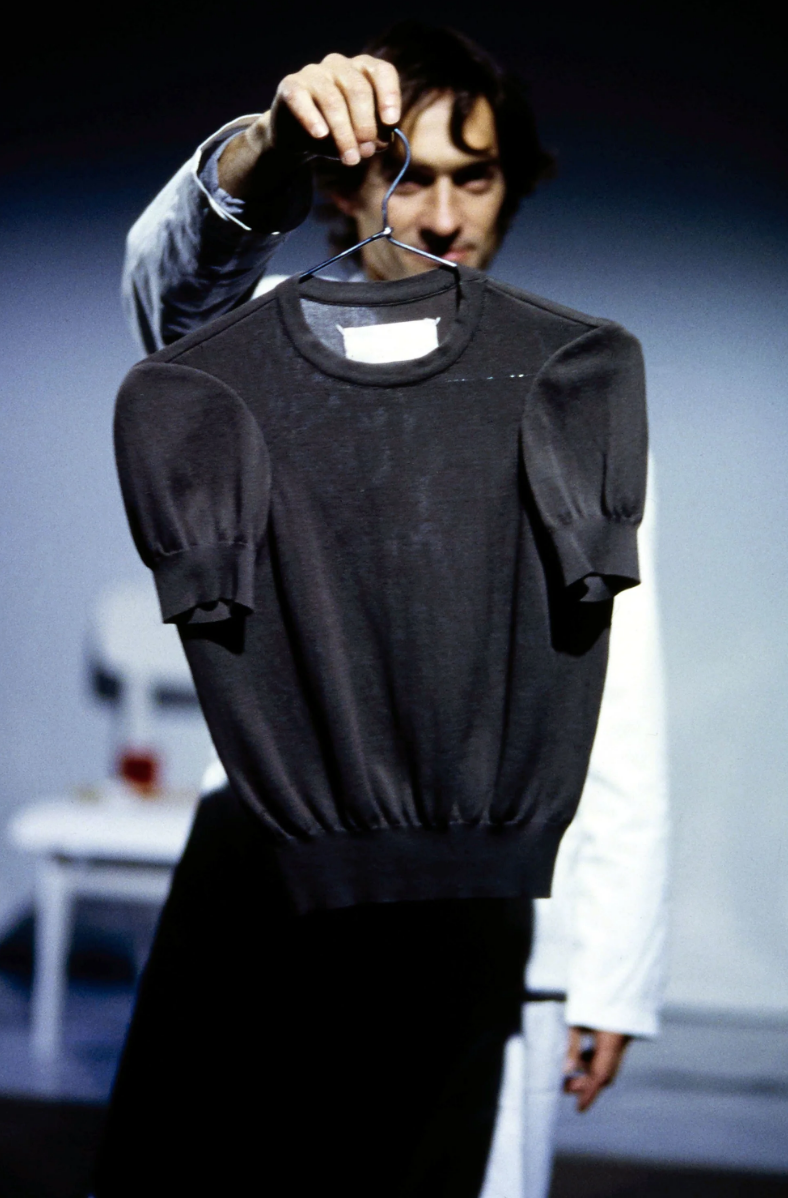
Rumours have circulated over the past few years of a feature length documentary being made about and actually featuring the fantastically-aloof Martin Margiela. The Belgian designer memorably retired from fashion by quitting his own company, Maison Martin Margiela, at the peak of his success in 2009. Now completed, Martin Margiela: In His Own Words will be screened at the Doc NYC film festival in early November. Directed by Reiner Holzemer, who previously made the 2017 documentary Dries, the film sees Martin Margiela for the first time ever discussing some of the 41 ground-breaking collections created during his time at the Maison, as well as revealing his private drawings, notes and other behind-the-scenes gems.

Although Maison Margiela continues to go from strength to strength since Martin’s departure, there's still a hunger among fashion fans for morsels of info about its founder. Throughout the twenty years from when he launched his eponymous and hugely influential label in the late-80s, right up until his departure (and even since then), Martin has succeeded in being artfully-anonymous, inscrutable and apparently invisible to those beyond his inner circle. 

Those of us unable to casually nip to New York to catch the debut screening of Martin Margiela: In His Own Words will have to hope it soon appears on Netflix. In the meantime, i-D brings you a round-up of what we do already know about our favourite Fashion Mystery Man.


1. Martin Margiela was born in 1957, in the Belgian city of Genk. After completing a Foundation art course, he went on to study fashion at the prestigious Royal Academy of Fine Arts Antwerp, between 1977 and 1980. The same famed institution has also spawned fashion design innovators such as Dries Van Noten, Raf Simons, Walter Van Beirendonck, Bernhard Willhelm and Ann Demeulemeester, among others.


2. Martin Margiela got his first taste of fashion when he was a kid and saw a TV show featuring the massively-influential-in-the-1960s designers Andre Courreges and Paco Rabanne. In probably his only ever documented interview, from his post-graduation years in the early-80s and long before he was famous, he recalled this telly-based epiphany to Sphere magazine: “As soon as I saw their designs I thought, ‘How wonderful, people are doing the sort of thing I want to do.'


3. Martin Margiela loved rummaging about at flea markets when he was a teenager and was good at putting second-hand clothes together to create a cheap-but-stylish look. This love of old, pre-worn clothes would later resurface in his work when he was a fully-fledged designer.


4. Martin Margiela would chat endlessly about clothes and style during his teens with his similarly fashion-obsessed bezzy mate, Inge Grognard. Inge would years later become the make-up artist for all of his shows.


5. Martin Margiela was never fixated on the traditional notions of beauty - even from a young age he adored women with big noses, for example. And he consistently championed diverse and unconventional-looking individuals to be models at his shows.

6. Martin Margiela bagged a job as a design assistant to Jean Paul Gaultier in Paris, in 1985, remaining there until 1987. Then, he set up Maison Martin Margiela, in 1988, with the help of his mate and business partner Jenny Meirens.


7. Martin Margiela never indulged the media with any face-to-face or telephone interviews. He and his team preferred to respond as a collective to journalists’ questions (‘We’ rather than ‘I’). Their answers were typed up and sent via the trusty MMM fax machine, and later email.


8. Martin Margiela was the subject of many-a-bizarre rumour during his design reign, all of which were prompted by his anonymity. Some fashion biz insiders claimed to have met him and reported he looked just like Jesus. Others were convinced that Margiela’s genial in-house PR, named Patrick, was actually Martin himself. More extreme theories included a belief – expressed at the time by Vogue – that he was in fact a woman. The daftest rumour was that he didn’t really exist at all!


9. Martin Margiela avoided using fancy venues and obvious locations for the Maison’s shows and presentations (a stance subsequently adopted by various other designers). Instead, the fashion pack would have to nervously trek to decidedly unglamorous areas of Paris to check out the latest MMM collections in venues including a kids’ playground, a semi-derelict warehouse, a disused tube train, the staircase of a dropping-to-bits house and even a double decker bus, packed full of models and ‘accessorised’ by a Belgian brass band, which performed the soundtrack.


10. Martin Margiela, although busy with his own label, also took on the role of Creative Director of womenswear at revered French house Hermès in 1998. This meeting of minds ultimately proved to be a very successful hook-up, despite initial doubts by certain snooty fashion critics and ageing Hermès customers, who thought Martin’s own work was way too weird.


11. Martin Margiela has been a major source of inspiration to lots of other well-known designers. Marc Jacobs once enthused to Women’s Wear Daily, “Anybody who's aware of what life is in a contemporary world is influenced by Margiela." Nicholas Ghesquiere, the Creative Director at Louis Vuitton, is also a major appreciator of Mr M. And the late Alexander McQueen once raved about him during an interview with The Independent: "Of course I like Martin Margiela. I'm wearing him now. His clothes are special because of the attention to detail. He thinks about everything, the cuff of a jacket, the construction of an armhole, the height of a shoulder.”


12. Martin Margiela was so inspiring to a young Raf Simons that he switched his career aspirations from being a furniture designer to pursuing fashion design, instead. This abrupt about-turn happened after Simons saw Margiela’s slightly haphazard but hugely influential Spring-Summer 1990 show, staged in a children’s playground on the outskirts of Paris. Raf later recalled this event: “Three girls came out. It was a split second – I knew I wanted to do fashion.” Simons subsequently paid tribute to Margiela’s Autumn-Winter 1997 collection by referencing aspects of it within his own Autumn/Winter 2016 men’s collection.


13. Martin Margiela was clearly also a big influence upon Demna Gvasalia. Gvasalia used to work on the design team at Maison Martin Margiela back in the day, and prior to that studied fashion at the same college as Martin. Similar to Maison Martin Margiela, Vetements routinely utilised gritty, offbeat places to show their new collections in Paris, modelled by an array of non-typical models and quirky characters. And Vetements’ A/W 18 collection explicitly paid tribute to the work of Martin the Maestro, featuring jackets worn inside-out, deliberately creased clothes and even cloven-toed boots that were an obvious nod to the iconic Margiela ‘Tabi’ design.


14. Martin Margiela also ranks Kanye West among his famous fans. The rapper/designer namechecked Margiela in his 2011 track Ni**as in Paris and, a few years later, the Maison created stage-wear and masks for his 2013 Yeezus tour. In 2016 Kanye suddenly filled his Instagram with 99 archive images from Maison Martin Margiela. He also made no secret of channelling inspiration from Martin’s back catalogue (as well as other influential designers’ work) in his own Yeezy collections, telling Style.com: “You see Raf Simons right there, you see Helmut, you see Margiela… you see Katharine Hamnett. It’s blatantly right there.”

15. Martin Margiela was rumoured to have often sat in the audience at his own shows – partially disguised by wearing a humdrum baseball cap and a not-very-exciting beige jumper!


16. Martin Margiela was one of the first designers to adopt a sustainable approach to fashion design, re-using and modifying existing garments into new creations. He and his team produced amazing hand-sewn Artisanal collections, which were made from things like old, discarded gloves or ties. He is also credited with pioneering ‘deconstructed’ fashion, by leaving exposed hems and raw stitched seams clearly visible in some of his clothing, to celebrate imperfection and grunge-y glam.


17. Martin Margiela also liked using cheap and sometimes-jokey materials within the designs created at Maison Martin Margiela, whether it was coats made from wigs or scarves constructed out of Christmas tinsel.


18. Martin Margiela was good at turning trash-into-treasure in other ways, too. One of his team once reminded him that he needed to send a thank you gift to a top fashion editor. He promptly fished out an old plastic carrier bag from the bin and deftly fashioned it into the shape of an angel… perfect pressie?


19. Martin Margiela is not a fan of social media and has cited its increasingly popularity as one of the factors in him deciding to quit fashion. Having been honoured for his ‘entire career’ at the 2018 Belgian Fashion Awards, he issued a statement which explained his retirement a decade previously: “I felt that I could not cope any more with the worldwide increasing pressure and the overgrowing demands of trade. I also regretted the overdose of information carried by social media, destroying the ‘thrill of wait’ and cancelling every effect of surprise, so fundamental for me.”


20. Martin Margiela is rumoured to have spent much of the time since his retirement from fashion enjoying holidays in far-flung locations such as Brazil and keeping himself busy by creating collages and other artworks.


MM6 MAISON MARGIELA AW19 Show by Slow Waves


An entire wardrobe of MM6 classics reimagined in puffed-up, padded forms. Representative of the collective identity of the house, the Autumn-Winter 2019 collection is unified and mysterious; democratic and inclusive. Individual garments remain humble – never overridden by concept. Instead, the MM6 wardrobe, which encompasses ready-to-wear, accessories, footwear and jewellery for women, continues to evolve and build upon its own modern wearability.

AMBUSH’s Yoon Ahn Defines Today’s Meaning of Luxury by Slow Waves


By Christopher Morency for Highsnobiety

When Ahn co-founded jewellery-turned-fashion label AMBUSH, she’s single handedly pushed the boundaries of what high-end jewellery looks like, catering experimental designs to a loyal clientele that includes Kanye West, A$AP Rocky and Skepta. The line is sold at some of the world’s most globally influential retailers and has partnered with Nike, Amazon and Beats by Dre.

Meanwhile in April 2018, Yoon also joined Kim Jones’ team at Dior Men’s as head jewelry designer, where’s she’s worked on statement pieces with Daniel Arsham, Kaws and Hajime Sorayama.

We caught up with Yoon in Paris where we talked about being a woman in streetwear, working with Kim Jones and how fashion has become more of a branding and communication game than just about design alone.

Christopher Morency: Yoon. Where are we sitting today?

Yoon Ahn: We’re at the new Lucien Pages PR showroom. I think they just moved here a few months ago.

In a recent interview you did with SSENSE, the interviewer spoke about The Antwerp Six. You’re creating something similar for the Instagram age with people like Virgil and Matthew Williams, Heron Preston and Kim Jones. I think it was Spring/Summer 2018 when a new wave came up. Did you feel it was different that time around?

I think working with Kim put me in a different light because, AMBUSH has been around for a little bit, and I’ve been coming to Paris every Men’s Week as well, but just being on that platform definitely took it to different levels. I’ve been friends with Kim for over a decade. I actually met him in Tokyo, backstage at a Teriyaki Boyz concert. [My partner] Verbal was in the group. At the time, I was working with Kanye on Pastel, and he was in Tokyo. Verbal was in Teriyaki Boyz, and we’ve been friends since, and this is before Dunhill, too. [Kim] always wanted to do something together. I mean, we did work on something, a quite small but fun projects while he was at Vuitton, but everything is about timing.

There’s a shift in luxury fashion where, obviously, streetwear and luxury have come together, where you can’t even categorize those two anymore as two separate entities. It’s all just luxury.

You have to understand that the term streetwear might be quite new to this side of the world. But it’s something that’s been such a big part of the whole fashion scene out in Tokyo. It’s so embedded in how we live, that we don’t even talk about the word streetwear. You know what I mean? Streetwear is a lot broader than what it used to be.

I wanted to go back a bit. Do you remember your first time, your first real interaction with luxury, and the first time you really thought this could actually be a career?

I mean, of course, when you’re growing up, when you get your first paycheck, you want to buy your first Vuitton or Gucci and all that stuff, because that’s something that’s been taught to us. That those are the things that we [should] desire, and when you achieve certain success, it’s owning those things that kind of defines success, and how you’re making it in this society. But when I started fashion, it was literally just about making my and Verbal’s ideas into shape. That’s all we wanted. We had so many ideas of how to do what we wanted with jewelry, and that was the beginning of Ambush.

You had a line before AMBUSH right? How did that inform the launch of AMBUSH?

It was more for personal use, so custom pieces. We started off with fine jewelry because Verbal wanted to only use fine diamonds, rubies, sapphires and 18 karat gold. It was a learning experience as well because we just had an idea. Maybe we were kind of naive and young, but we just wanted to [create]. That’s how we met a few people who helped us in the beginning to launch AMBUSH. It scared a lot of people off because it wasn’t something they were used to making, and we weren’t from the jewelry field. These guys were so used to making safe stuff because they were hired to make those things to sell. So it was hard convincing them to do things. But in the end when they saw the products and what it turns out like you could tell they had fun because they couldn’t stop smiling.

What were those early AMBUSH days like?

It were the late 2000s. we got into making POW chains. We had one huge knuckle ring that we turned into small chains in neon colors, which we started giving out to friends and that’s how people like Kanye picked it up. I mean, he did put us on the map, I really appreciate it because we weren’t even trying to build a brand, and then all of a sudden this guy wears it, and you get all these calls from buyers. So we’re like, “I guess we have to make it and put it out to stores.” So the beginning was quite humble. We were literally packing it up in the apartment we were living in after we would come back from the club as we used to throw a lot of parties in Tokyo. We would host the parties, come home at 4 in the morning, pack up the jewelry because the delivery would have to be shipped in the morning. That was the start of AMBUSH.

Work hard, play hard in the literal sense.

It’s so important to play, because those are the times that our ideas and creativity just flowing. You know, because we’re just out there with open minds, meeting so many different people and seeing different things and giving us so many ideas. You know.

I wanted to quickly go back into the past. Can you tell me a bit about what that was like early on, and what were you into in terms of fashion wise and music wise?

It was moving around a lot because my dad was in the US Army, so he was constantly packing and moving. So I lived in so many different cities. To be honest, when I was little, it wasn’t the easiest thing because I couldn’t make friends, because by the time you get used to a place, you’re like “okay next.” So I did spend a lot of time by myself, and when you spend a lot of time by yourself it just becomes about books and magazines and like those things.

When we settled in Seattle, I worked at a public library after school, because I wanted to just read all this stuff for free. Because you don’t have money to buy all these magazines when you’re little, but if you’re at the public library you’re technically getting paid to read. I thought that was the best idea. It’s how I got to know all the British magazines like I-D, The Face, and all those. And I was just like “what are these worlds? What am I doing in this dark, rainy place?” It was then that I decided that, I’m getting out of Seattle.

I don’t think that a lot of people, especially from the Gen Z generation understand the escapism that magazines gave.

There was internet but it wasn’t like now. You couldn’t get on the phone if someone was on your internet, and magazines were how you got information back then. They got published once a month so you had a whole month to read cover to back and, over and over. Looking back, I was able to learn so much about different cultures, by taking the time.

You eventually moved back to Tokyo. Why?

For a change of scenery. I wanted to move to New York to work, and Verbal was like, “why don’t you check out Tokyo.” I’d never lived in Tokyo, obviously because I’m not Japanese, and didn’t speak Japanese. So moving to another country wasn’t the easiest thing. But I was like, “why not?” You know, if it doesn’t work, I always had a choice to go back to the US. I’ve been there for 15 years and I’ve met so many wonderful people that I don’t think I would’ve otherwise met. It’s also led me to where I am now. It’s such a conducive environment to be creative. I always think about me being Asian American, if I were to do what I’m doing now and had to start in the US, would it have been the same? Definitely not. It isn’t easy. I think also, creatively, it’s such a big place.

Now being more and more in Paris, what’s that like?

It’s an interesting crossroads of the old meets new and where the past meets the future. You have to understand, a lot of those cultures that they embrace, and I’m talking about the streetwear scene but also music, those have all been imported. Those are the things that they took in from our side and they loved it so much that, the few people who are passionate about it, they turned it out even better, because that’s how obsessed they are with it. So, in a way, their appreciation for certain things that happen in the West, they perfected it because it wasn’t their own thing. And I think me being in that environment, it really taught me to look at things differently, and it helped me to appreciate so many things that I don’t think I would have otherwise would I have lived in the US.

This appropriating and remixing of cultures. Sampling in a way, we see it in fashion a lot more than we used to. I think everything is repetitive in its essence. And that really brings me back to what you do with AMBUSH. You recreate the idea of a puffer jackets to make it into a blow up life jacket, or crushed cans into a bag and zip ties into jewelry. How has sampling really informed what you do at AMBUSH?

It’s all stems from a DIY mentality. Me having so much admiration for the punk movement, but also just me being an outsider [allows me to] explore all these ideas without any rules. I think if you live in a culture then you have to participate in it, and there are so many rules within those scenes. You start going into the topics of what’s real, what’s not, and all those things. And because I’m an outsider, for me it doesn’t apply. So I in a way, I’m free from all those things. [Asking questions like] “Why not this? How about we do it this way?”

It’s not luxury in the traditional sense.

You have to look at the generational shift too. The environments where we grew up, our ideals, our values. The old luxury was catered to upper class people. It still exists in the world but generally speaking, the new money [crowd] has different interests and different things that they spend money on.

Having my own brand, I also understand the consumer side of what really works with customers and what they’re seeking. And it’s also about this idea of what [defines] upper class and what [symbolizes] luxury. It’s no longer this very European-like colonialism way of thinking, as in what’s been installed into so many countries and this idea of how it should appear. I think those things are all coming down thanks to the Internet, and I think, thanks to the rise of Chinese customers and Japanese customers having this power to be able to demand when they want something. I think that becomes a trigger for a lot of these luxury houses to have to rethink [what they know].

What do you think a lot of luxury houses get wrong about the Asian market?

To be honest, I think me being an Asian-American who lives in Asia, I have a quite good understanding of both worlds. [Brands] do look at Asians, collectively speaking, as people who consume things. So they just look at us like it’s a money spot. But it’s definitely shifting, the respect is growing. You know, once it was looked at as, “Oh, we just have to do business there because it makes money.” But there’s definitely going to be a huge cultural shift in the next decade.

To go back to luxury. Do you still think it’s tangible? Is luxury still something money can buy or is it bigger than that?

That’s such a big question. I don’t think there’s one specific answer because it’s quite subjective, and I don’t want to say my answer is the correct one. But for me, at this stage in my life, I think it’s something that isn’t tangible. For me luxury is something that you really can’t purchase with money, like time, health, those things. Being able to be healthy is a luxury in itself and then having the time to spend it the way you want to is a luxury. So that’s where my mind is right now.

Between all the working, do you still get time to obtain that luxury?

It’s busy and quite demanding. Fashion is nonstop working. But I’m thankful just to be able to do what I love. I mean, I feel blessed each day. I didn’t even study this. You have to think about it. I’m literally an outsider coming in and being able to do this, you don’t understand. I’m tired and all this stuff but I’m not trying to sound like a Hallmark card. I’m happy and really thankful for all these opportunities.

When was the first time when you saw that your work was being recognized?

The first shift was definitely when Kanye wore our jewelry. I was like, “Oh, this is the power of a star that can put you on the map.” I guess the next thing is definitely just being able to work with Kim at Dior. I’ve been doing Ambush since the late 2000s but it was 2012 when we started putting out proper collections twice a year, and the business has been growing, opening up our own brick-and-mortar and just generally the business growing. But that’s still my own business that I’ve started with my own money out of my own pocket and built it. Being at a luxury house like Dior and seeing a different side and way of doing business definitely opened my eyes in such a big way.

Having a business isn’t just about designing things. I overlook every aspect of it down to customer service, how they write back to customers, to training the store staff. I’ve talked to them, I get reports on exactly what moves, what doesn’t. It sounds tedious, but that’s the business because everything’s out of my own pocket at the end of the day. People have to remember that this is business.

I think a lot of kids nowadays think they can make some screen printed T-shirts and call it a brand.

No, that’s a hobby. This is business. At the end we make products, we sell to customers. Having said that, it does matter what you create, is it translating to the customers, and also from that you build your business, step by step and then you want to take it to the next level. I have a certain thing in mind that we’re working towards with AMBUSH. And the things that I got involved in every day, it taught me so much because just listening to our customers and listening to our shop staff. The terms “marketing” and “Marketing Director” might sound boring, but they’re so important because that’s a big chunk of business that actually moves the whole business. So having that knowledge, it helped me when I went into Dior, having meetings with the marketing team and the directors. I even moved the studio above my Tokyo shop so I can understand what’s happening every hour.

When I started having meetings at Dior, it was a great moment because I was a little intimidated but at the same time I actually knew about this stuff. I realized it wasn’t that different than my business. It’s just the scale happens to have extra zeros at the end.

Walking into a house that has this massively larger scale. How was it the first day?

Eye-opening and exciting. I don’t really get intimidated because I know my lane, I know what my duty is within the team and [subsequently] what I need to focus on. I just wanted to make sure that whatever I created with Kim, translates into sales. It’s not that sales is everything at the end of the day, but what I mean by sales, I want to see people own it and just enjoying every moment of it. It’s not just about seeing the clothing at a show or in a magazine, but about consumers actually going out spending their hard-earned money towards owning something and then just enjoying it. That’s everything to me as a designer.

What’s the approach working with Kim Jones?

He’s the director. There are different teams. My job is to make jewelry so I can’t just force my own ideas into it. I have to make sure that what we make compliments every area because we’re creating the whole look head to toe. So, Kim sets up each collection: what he wants to do, who he wants to work with and all those things. I want to make sure the jewelry complements what the apparel team is coming up with, because they’re not making those things around the jewelry. There has to be good teamwork.

What’s the power of jewelry in this aspect? What does it contribute?

I don’t see gender in jewelry. It’s not a marketing thing, it’s how Verbal and I just started in the beginning. We wanted to make things we could both wear. A ring is a ring; a necklace is a necklace; a bracelet is a bracelet; those parts of the body don’t have gender parts. Right? So, that’s why we call it unisex. It doesn’t have the men’s or women’s, it’s just a ring at the end of the day. I think I was able to bring this in [at Dior], because I think there’s a huge shift in male customers don’t care about the definition as much now.

It’s interesting to see this little renaissance in men’s jewelry.

Historically it were usually the men who were decorated in jewelry, I don’t know where in the history this shifted. Maybe it was just Christianity, or I don’t know what it was, that put this mentality on people that decorating yourself as a form was a feminine thing. It’s funny, isn’t it? How the ideals just triggered into different cultures. But now it doesn’t really matter [anymore].

What are some of the lessons you’ve learned in business?

I haven’t always been this way. I learned the hard way. It’s a lot of things I’ve done in the process that cost me a lot. I learned that [things] don’t work with customers. I would have this ego like it’s going to be a hit, it’s going to do so well. But sometimes customers didn’t connect to it. I don’t look at that as a fail, but it made me think about what I could do better. I honestly think it comes from my parents just being immigrants and just having their own little business after my dad settled down from the army, and just growing up watching them just working 14-16 hours a day. Every single day except Sunday because they had to go to church. Growing up in that environment I think it just naturally made me responsible.

I wanted to speak about collaboration. I think it’s a really interesting word to speak about when we speak about today’s luxury industry and that spirit of collaboration that came from streetwear originally, and is now trickling all the way upwards to luxury. What’s the importance of collaborations in today’s day and age and why are brands more open now?

It’s definitely coming from consumers. They want something different. And it’s fun to collaborate and especially with people you respect and things that you can bring in, they can bring in, and it gives birth to new things. It’s exciting for consumers too. But collaborations are quite saturated in the market right now. But you can tell when it’s genuine. [It works when there’s] genuine respect for each other and also there’s a story. I think a lot of people just do it for quick marketing reasons. But consumers are so smart now, they can see through these things. A good collaboration, usually requires a few things. You need a surprise element that you didn’t expect and creates a good synergy. We don’t make shoes at this moment, so it makes sense for us to work with Nike and Converse because it could help us with other items.

Talk to me more about Nike.

My understanding of a Nike collab, was that you had to play sports. So when they reached out to me and wanted to collab, I was a little bit surprised because I don’t play sports. So I was kind of thinking, how can I come up with something that at the end of the day can [translate into] performance. I’m a working woman, working nonstop from morning to night, so how can I make sports gear that I can wear from morning to night time? And that’s where all those ideas came like, I can wear these to the gym, but I can still go out at night. That’s why you can convert the garments into different looks by flipping it.

Being a woman and making sportswear now with Nike. What do you think that different approach is?

I think [Nike] is having much more fun with it and they’ve loosened up a lot. My impression is that it was much more serious before because they were more focused on athletes, which they still do, but I think they’re exploring different territories. I think they’re definitely on the right track. Whenever I work with Nike I have so much fun. Honestly they never say, “No.” To a lot of things I come up with, they’re actually really open about it. And this fun like that, I could kind of do certain things with Nike that I’ve never seen in Nike catalog before.

What have some the challenges been creating your own brand? It’s not something that’s often talked about.

With any business, to get into a role takes a decade. It’s not just about sitting there everyday, you have to really build and try it and do it better next time. If it doesn’t sell, doesn’t move in the stores, there’s no point to it. At that point it just becomes an expensive hobby, right? So what I would tell young people is that I know a lot of people, the fashion designer has become such a desirable career path.

But you have to understand that this is pure business. You’re making things, you sell it and it’s finding your place in the world. Fashion is already a very competitive and saturated market. So whatever it is you want to tell, make sure it’s very clear. And even if you know what it is you want to tell, it’s going to take hard work to convince people as well. Fashion isn’t the easiest. Another thing that I can say is that you need to have a lot of money to burn in the beginning. It requires a lot of capital and that’s real talk. If you’re coming out of school, unless you understand how this business works, I advise you to go work at someone else’s brand and learn from that. Get paid to learn pretty much. Give your service to these people and after you get the grip of exactly what it is you want to say, then go into your own business, because you don’t always have to start your business from day one.

Absolutely. How has that role of creative changed over the years?

I don’t think it has changed. It has always been the same. I think you have to design and you have to be the best promoter and all that stuff. Except we live in a digital age now, so it’s not like in the magazines. People want to see who made the clothing and why they came up with it. That’s just how people think now. They want to see it instantly. What were they thinking? Where did they do? They’re more curious about that person’s life. So it really depends on how you want to carry it. But more than ever you have to be a better marketer and designer [than before]. There are a lot of hats to wear.

I feel like a lot of kids nowadays want to buy into these micro-communities. What would you say the importance is of having that group around you and really creating a family feeling around a brand. Is that important?

Yes and no. I think it depends how you want to create your brand and what story you want to tell. If you look at it more as community oriented, then go ahead and do that. But if you have a distinctive story to tell and you want to bring something that no one else is doing, I think it’s better to just do it on your own, be on your own. There are no right or wrong answers.

What brands excite you?

It’s a big question. But I actually have more fun looking outside of fashion because I get more ideas there. But artificial intelligence really interests. I look at a lot of technologists. I love what Boston Dynamics are doing. I think it’s insane to see those robots and how quickly they’re advancing. Sometimes I kind of have these daydreams at the office. I just think, “Man, one of these days it’s all going to be replaced by AI. So that’s going to be kind of sick.” It’s not something you can be scared about, it’s just going to happen.

Will it work for us?

Yeah, it will compliment us. We humans generally get afraid of something that we’re not familiar with but, we all think it’s like Terminator. And there’s a danger to AI but we’ll see. I like to look at it more positively. I like to rather embrace it because it’s happening and hopefully it will lead to a better path. [The truth is] is that most of the workforce is going to be taken over by AI and robots in the future. It’s going to happen faster than we think, especially in fashion.

Where do you see fashion going in the next five years?

It’s hard to tell because I’m not an oracle or a fortune teller, but for sure people will rethink environmental issues. I think we’re all aware of that. And it isn’t going to stop because we’re living in a capitalistic society, real talk. But after being informed more, consumers will definitely shift. I think hopefully that will lead to a better path [in terms of] fighting overproduction and also upcycling and reusing things. We don’t need this much stuff, especially lower price apparel, we don’t need it just to be worn [once] and then be thrown out.

Thank you Yoon Ahn.

VOGUE: John Galliano Extends His Contract at Maison Margiela by Slow Waves

By Steff Yotka for Vogue

After five years as creative director of Maison Margiela, John Galliano has extended his contract.

The news was announced this morning in a release from Renzo Rosso’s Only The Brave, the conglomerate that owns Maison Margiela. “I am super excited for this new chapter and grateful to Renzo for his belief in me and the vision for Maison Margiela,” said Galliano. The exact length of his extension is unclear, but it is expected to be at least several years.

Galliano joined Maison Margiela in 2014, taking over the brand’s menswear, womenswear, and accessories and creating its Artisanal couture collection. Under his tenure, revenues have doubled, according to the brand, with accessories making up 60% of the label’s total profits. “Five years ago I believed that John was the only person who could take this house in his hands, and I am even more convinced of this today,” said Rosso in a statement. “John’s undisputed talent is only matched by his understanding of today’s generations, their way of thinking, their struggles, their dreams. And he is doing exactly what this Maison always did at its best: disrupt, innovate, and inspire.”

When Galliano arrived as creative director, his first task was rebranding. Not only did he swiftly clip the brand’s name to Maison Margiela—leaving out “Martin,” the name of the brand’s illusive founder—but he also worked to reestablish himself as one of fashion’s great couturiers, coming back from a rehabilitation period that followed his dismissal from Christian Dior for racist and anti-Semitic remarks. Galliano’s return to the runways was an all-red couture collection shown in London that put his craftsmanship and flair for deconstruction on display. What followed since has been a blurring of gender lines, appraisal of historicism, and focus on remodeling tropes of fashion from the staid British trench to the strict nuns habit. Expect all this and more from Galliano at Margiela in the future.

VOGUE: Marine Serre Discusses Her Spring 2020 Collection by Slow Waves

“After the Apocalypse…Maybe You Try to Make a Wedding Dress”

By Steff Yotka for Vogue

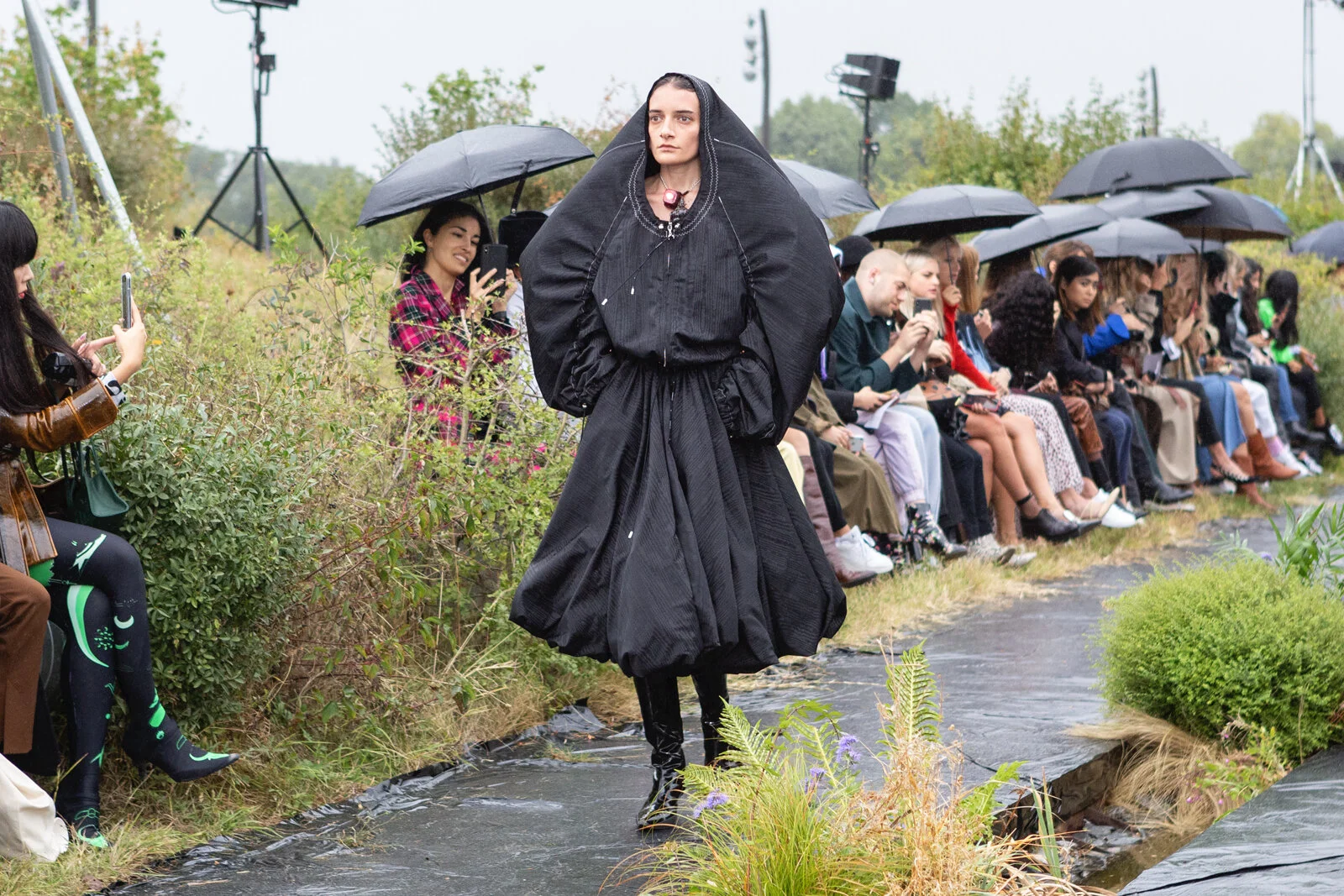
Marine Serre does not mince words. The designer called her Spring 2020 collection “Marée Noire”—French for oil spill—and set her show on a wild hillside near the Hippodrome de Paris in the drizzling rain. A cast of real-world models walked over a swamp on a runway wrapped in black to look like oil. The internet went wild for the second dude out, a middle-aged man with hollowed-out cheekbones and a grimace that could put Willem Dafoe out of business. Days later, in her studio on the outskirts of Paris’s 19th arrondissement, Serre reflected on the potency of her set: “If it had been roses,” she said of the brush around the runway, “I wouldn’t have had the show there.”

Serre’s willingness to add a little aggression, maybe even viciousness, to her runway presentations is part of what catapulted her to the international stage as one of fashion’s more provocative young designers. Her intensity is matched by a deep thoughtfulness: Serre is a passionate and knowledgable environmentalist and has, since launching her brand in 2016, worked dutifully to upcycle 50% of her garments, each year working to increase that number. That all wouldn’t matter, of course, if she wasn’t a deft tailor and draper, working out the problems of how to turn used neoprene wetsuits into Grecian-tinged dresses or hotel towels into miniskirt suits. What materials Serre and her atelier have, they use, and when they run out, production is over. “That’s the thing about upcycling, we don’t have to make too much. And when the [resources] stop, you don’t force it,” she said.

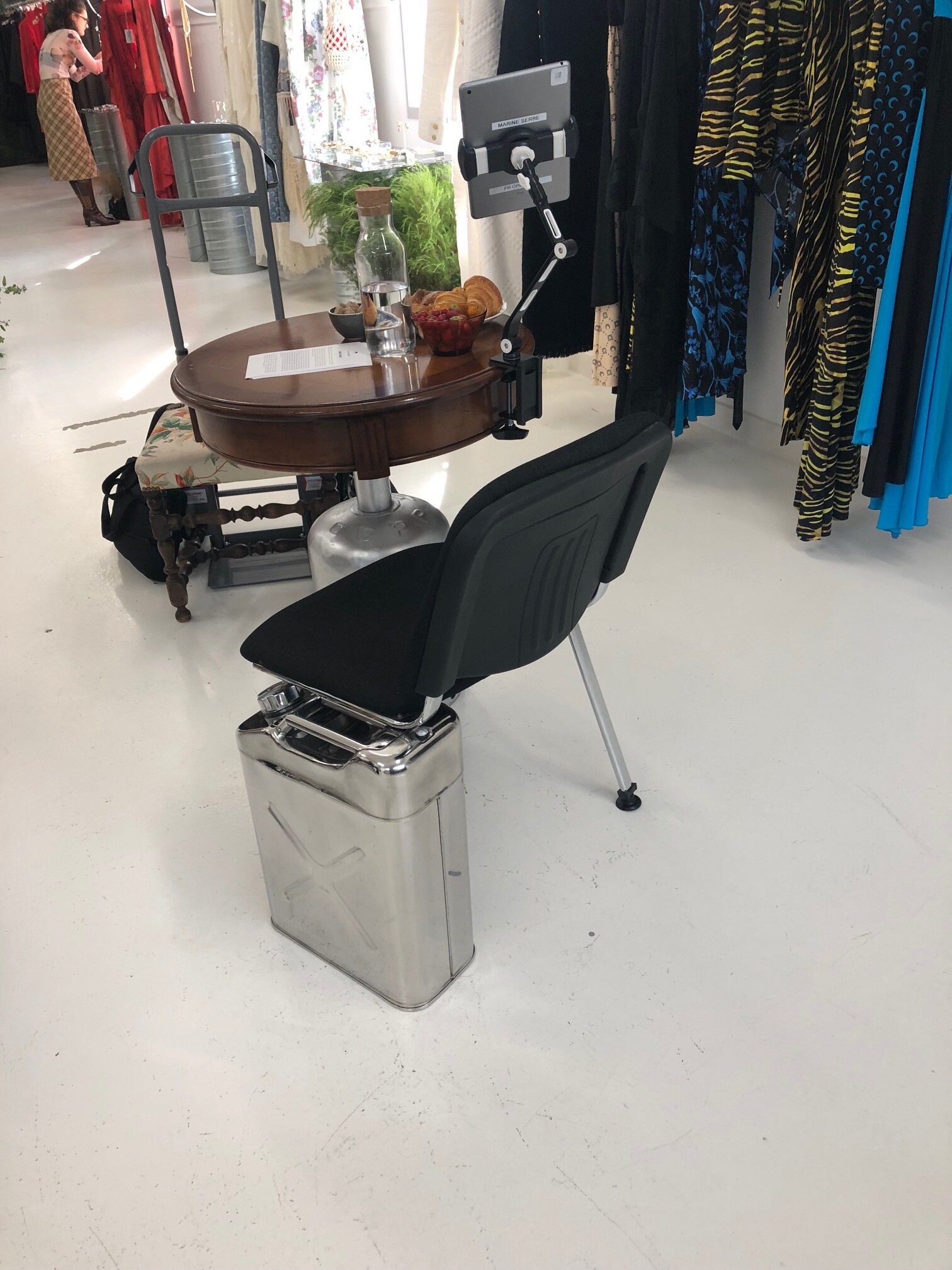
It’s not just the corseted dresses made from bed sheets, the granny scarves draped into bridal-worthy finery, and the metal jewelry strung together from seashells and ocean-weathered soda cans that Serre and co. have recycled either. In the studio, nearly every object and every surface comes from somewhere else. The shoes and bags are displayed in a meat case spliced with a vintage dresser. The pipes guests sat on during the runway show have since become plinths for jewelry. Chairs and tables scattered throughout are Frankenstein’d; motorcycle wheels combine with mid-century tabletops, and hand trucks serve as the back to dinette chairs. Just before the Vogue team arrived, A$AP Rocky had passed through, trying to buy up every piece of furniture while picking out a Marée Noire trench to wear out in Paris that night.

Maybe the furniture will go up for sale soon. Maybe Serre will launch a program to buy back her previous season garments. Maybe she’ll even let customers send in their unwanted wares for her to transform into something new. The potential of what Serre can rebuild, recycle, and recreate seems endless. But for now, she’d like to reveal a little bit of her process and some of the story of her Spring 2020 collection. “After the apocalypse…maybe you try to make a wedding dress,” she said, nodding at pieces mashed up from scarves, blankets, wetsuits, and tablecloths.

Elle Magazine: Yoon Ahn Is Suddenly Everywhere Right Now by Slow Waves


By Veronique Hyland for Elle Magazine

Some fashion designers want to talk to you about the Michelin-starred caviar restaurant they just tried, or the vacation destination that has a yearlong guest backlog—you know, the one they just jetted back from? Yoon Ahn wants to talk about robotics. “Those guys, Boston Dynamics, that build robots?” she says, as if that will elicit some glimmer of recognition from me, her far-from-robot-fluent interlocutor. “I’ve been obsessing over them. They were trying to build this robot with new technologies, but I guess it wasn’t working out. So they went back to nature, and they started implementing things they were finding in insects and animals.” For Ahn, it represented a realisation that technology has its limits. “It made me think, ‘All the answers that we need already exist on this planet, right? The more technology that’s developed—how are we going to make it more human?’”

This turn in the conversation is as unexpected as a robot suddenly gaining sentience, but the detour comes about because we’re talking about the fall 2019 collection for her line, Ambush. The clothes have a futurist-meets-survivalist bent—ripstop nylon, quilted vests, cargo pants, carabiner clips worn as earrings—kind of like the outfit you’d wear to go on a hike in 2035. The initial concept came from a viewing of the David Bowie film The Man Who Fell to Earth, which she understatedly describes as “a weird movie.” The conceit is that Bowie, perfectly cast as an alien, comes to Earth when his planet runs out of water.

“But he ends up getting involved in earthly bad things, like alcohol and sex and drugs, so he never goes back,”

she summarises. For Ahn, a collection often starts with this kind of pop culture–assisted push. Some designers, she says,

“physically go to places to get inspired. I wish I could do that, but I don’t really have the time, so when I get obsessed with certain artists or certain movies, I try to draw ideas from those places. Also, I’m a city girl, so I look at those things as my mental escape.”

In fact, the Korean-born Ahn calls two cities home, splitting her time between Tokyo and Paris, where she works as the design director of jewellery for Dior Men. Despite the fact that she’s sidewalk-bound, she has an affinity for nature, perhaps because she spent part of her formative years in the Pacific Northwest (she relocated to Tokyo in 2003). She thinks a lot about the fate of the planet. The movie also got her thinking about artificial intelligence and outer space, prompting her to wonder, “Where are we heading? How are we communicating with people?”

This train of thought accelerated last year when she took in “Scary Beauty,” an “android opera” by the composer Keiichiro Shibuya, featuring an AI conductor and a human orchestra. “The humanoid was not programmed to lead them to make perfect music,” she says. “They built that humanoid to react to the human sounds and then kind of naturally direct them. So you don’t know how it’s going to turn out. And when I was watching that, I was blown away.”

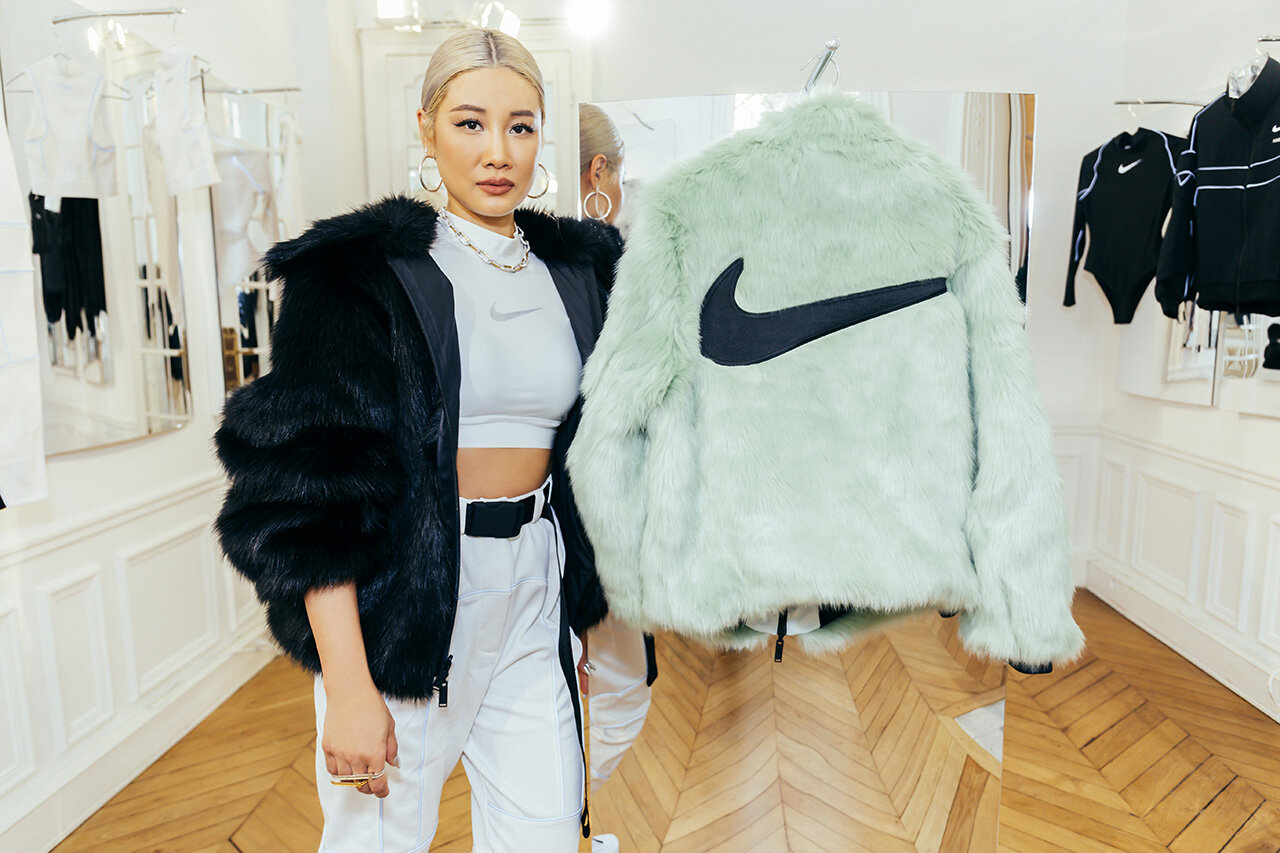
These might seem like ideas far outside the realm of fashion. Yet this same kind of interaction—technology mingling with nature in an improvised way, to unexpected effect—could describe Ahn’s preferred style of creation. Ambush began as an ad lib of sorts. Her husband, the rapper (and now entertainment executive) Verbal, who’s also of Korean descent, needed to look cool onstage. “We had issues with stylists bringing in stuff that wasn’t really him or what he liked,” so the two decided, “Let’s just do it ourselves.” With no formal design training (Ahn was then working as a graphic designer), they began making jewellery in collaboration with designer friends and started giving pieces to other friends, one of whom was Kanye West. From there, “it just kind of spread naturally,” abetted by the Tokyo club scene, Ahn says. This was pre-Instagram, when “you had to go to those places to flaunt your outfits. I learned the art of peacocking,” she says. Ahn’s personal style, which is bleeding-edge cool—platinum hair with a moat of intentional roots, colourful swaths of makeup (Fenty Beauty is one of her go-tos), weapon-like nails, and tons of jewellery—informed the overall look. Eventually, they added ready-to-wear to the line, and Rihanna, Lady Gaga, and Beyoncé started sporting their wares. Ambush has a Converse collaboration coming out this month; other recent linkups include Nike and Gentle Monster.

Ahn describes her work at Dior as “respecting [Dior Homme artistic director] Kim [Jones]’s direction, and then also keeping, and re-creating, the code of the house: ‘How can I create something new, so that we can bring fresh air and energy?’ ” Whereas with Ambush, “we’re building it still. For me, it’s more important to try different things, to see what’s ‘us.’”

The line is often described as streetwear, but she finds that term to be “a bit overused. When people look at something casual, they just call it streetwear,” she says.

“I think that’s quite misleading, because streetwear first came from the culture and from the streets. There’s an identity to it, so I don’t want people to look at something that we produced as something casual and think, ‘Casual equals streetwear.’ ”

There may be another reason she pushes back against the term: She seems to have a temperamental aversion to being categorised. That unpredictability comes out again when the conversation turns to music, and she starts talking about white noise. “Recently, I’ve been listening to a lot of nature sounds,” she says. “On YouTube, there are so many six- to eight-hour mixes of people recording in the rain forest, on the beach. Someone did it on an airplane. For some reason, I find it kind of interesting.”

I suggest that, perhaps, the nature sounds are a throwback to her upbringing in the Pacific Northwest, the rugged terrain that has shaped her design identity as well. “Maybe you’re right. Maybe it’s subconscious,” she allows. “I want to be in nature but I can’t, so I’m drawn to these things.”